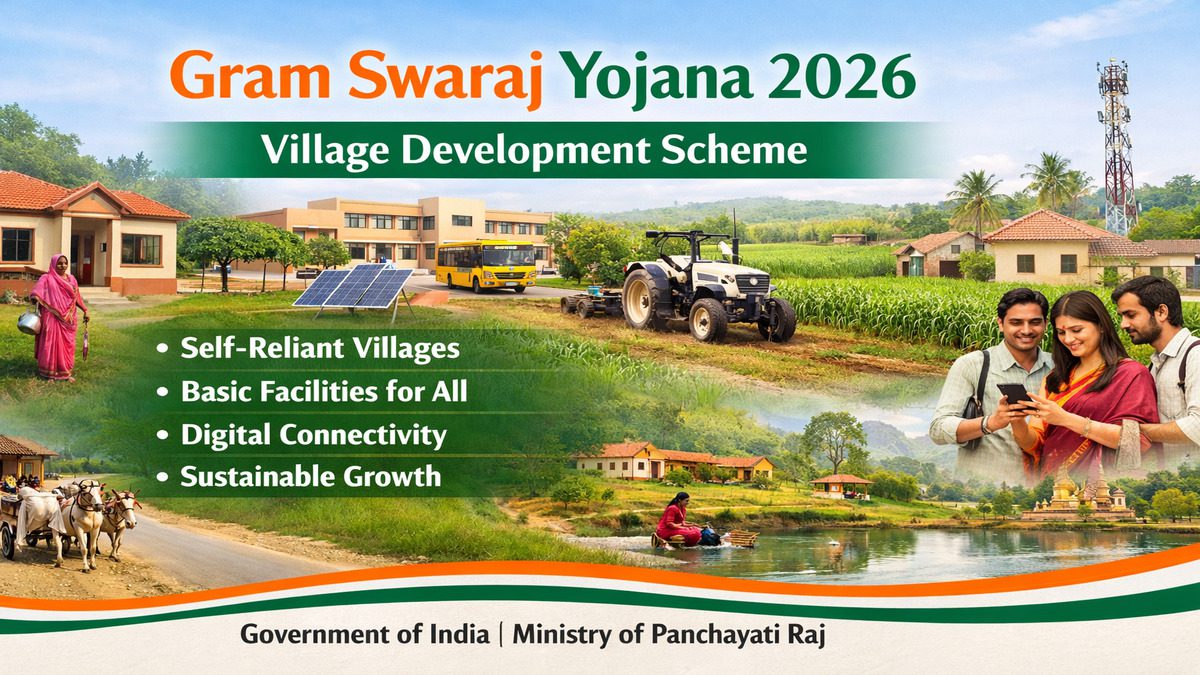
Hello friends. Today, I want to talk to you about a very important government scheme that is changing lives in rural India – the Mahatma Gandhi Gram Swaraj Yojana (MGSY). This is a special program launched by the Government of India to strengthen our villages and make them self-reliant. If you live in a village or are interested in rural development, this article will give you complete information about this scheme in simple English.
What is Mahatma Gandhi Gram Swaraj Yojana?
The Mahatma Gandhi Gram Swaraj Yojana is a central government scheme that started on 24th April 2018. The name itself tells us about its purpose – “Gram Swaraj” means “Village Self-Governance.” This scheme is named after Mahatma Gandhi because he dreamed of strong, independent villages. The main goal is to make villages self-sufficient and improve the quality of life for rural people.
The scheme comes under the Ministry of Panchayati Raj, which looks after village governance in India. It works alongside another important program called the Rashtriya Gram Swaraj Abhiyan (RGSA). Together, they aim to make our villages better places to live.
Main Objectives of the Scheme
The Mahatma Gandhi Gram Swaraj Yojana has several important goals:
- Strengthen Panchayats: Make village councils (Panchayats) stronger and more effective
- Improve Governance: Help Panchayats deliver better services to villagers
- Social Justice: Ensure fair treatment for all villagers, especially poor and marginalized groups
- Sustainable Development: Promote development that doesn’t harm the environment
- Capacity Building: Train Panchayat members to do their jobs better
- Basic Services: Improve basic facilities in villages
- Transparency: Make Panchayat work open and clear to everyone
Key Features of the Scheme
Let me explain the main features of Mahatma Gandhi Gram Swaraj Yojana in simple points:
1. Financial Support
The government provides money to Panchayats to carry out development work. This financial help allows villages to plan and execute projects according to their own needs.
2. Training Programs
Panchayat members receive regular training to improve their skills. They learn about:
- How to manage village affairs
- Financial management
- Planning development projects
- Using technology in governance
3. Infrastructure Development
The scheme helps build and improve basic infrastructure in villages:
- Community halls
- Panchayat office buildings
- Digital infrastructure
- Water supply systems
- Sanitation facilities
4. Social Justice Focus
Special attention is given to:
- Scheduled Castes (SC)
- Scheduled Tribes (ST)
- Women
- Other backward sections of society
5. Convergence with Other Schemes
MGSY works together with other government schemes to maximize impact. This means better coordination and more benefits for villagers.
Implementation Structure
The Mahatma Gandhi Gram Swaraj Yojana is implemented through a well-organized structure:
| Level | Responsibility |
| Central Government | Makes policy, provides funds, monitors progress |
| State Government | Implements scheme at state level, coordinates with districts |
| District Administration | Supervises implementation in districts |
| Panchayats | Actual implementation at village level |
This structure ensures that the scheme reaches every village effectively.
Funding Pattern
The financial arrangement for Mahatma Gandhi Gram Swaraj Yojana is as follows:
| State Category | Central Share | State Share |
| North-Eastern States & Hilly States | 90% | 10% |
| Other States | 60% | 40% |
| Union Territories | 100% | 0% |
This funding pattern shows that the central government provides most of the money, especially for poorer states.
Benefits of the Scheme
The Mahatma Gandhi Gram Swaraj Yojana offers many benefits to rural communities:
For Villagers:
- Better Services: Improved delivery of government services
- Infrastructure: Better roads, water supply, and other facilities
- Employment: More job opportunities in rural areas
- Social Justice: Fair treatment for all community members
- Participation: Chance to be involved in village development decisions
For Panchayats:
- More Power: Greater authority and resources
- Capacity Building: Training and skill development
- Technology: Digital tools for better governance
- Financial Resources: Funds for development projects
- Accountability: Systems to ensure transparent work
For Rural Development:
- Holistic Growth: All-round development of villages
- Sustainability: Environment-friendly development
- Inclusivity: Development that includes everyone
- Self-Reliance: Villages becoming more independent
Focus Areas
The Mahatma Gandhi Gram Swaraj Yojana focuses on several important areas:
1. Poverty-Free Villages
Helping poor families through various support programs and employment opportunities.
2. Clean Villages
Promoting sanitation, waste management, and clean environment through programs like Swachh Bharat Mission.
3. Healthy Villages
Improving healthcare facilities and promoting health awareness.
4. Child-Friendly Villages
Ensuring children’s education, protection, and overall development.
5. Socially Just Villages
Ensuring equality and justice for all community members.
How Panchayats Benefit
Under Mahatma Gandhi Gram Swaraj Yojana, Panchayats receive:
- Training: Regular training programs for members
- Technical Support: Help in planning and implementation
- Financial Resources: Funds for development work
- Monitoring Systems: Tools to track progress
- Knowledge Sharing: Platforms to learn from other Panchayats
Latest Developments
As of 2024, the Mahatma Gandhi Gram Swaraj Yojana continues to be an important program for rural development. The government has been focusing on:
- Digital Transformation: Making Panchayats more tech-savvy
- Sustainability: Emphasizing environment-friendly development
- Convergence: Better coordination with other schemes
- Monitoring: Improved systems to track progress and outcomes
Challenges and Solutions
Like any big scheme, Mahatma Gandhi Gram Swaraj Yojana faces some challenges:
| Challenge | Solution |
| Limited Resources | Better fund utilization, convergence with other schemes |
| Capacity Issues | More training programs, handholding support |
| Implementation Gaps | Strong monitoring, regular reviews |
| Awareness Problems | Information campaigns, community participation |
Success Stories
Many villages across India have benefited from Mahatma Gandhi Gram Swaraj Yojana. Some success stories include:
- Improved Governance: Panchayats becoming more efficient and transparent
- Infrastructure Development: Better facilities in villages
- Social Inclusion: Marginalized groups getting more representation
- Economic Growth: New opportunities for rural employment
How to Access Benefits
If you want to benefit from Mahatma Gandhi Gram Swaraj Yojana:
- Contact Your Panchayat: Approach your village Panchayat office
- Attend Gram Sabha Meetings: Participate in village meetings
- Stay Informed: Keep updated about scheme activities
- Provide Feedback: Share your suggestions and concerns
- Participate Actively: Get involved in village development activities
Important FAQs
1. What is Mahatma Gandhi Gram Swaraj Yojana?
It’s a government scheme for strengthening Panchayats and rural development.
2. Who benefits from this scheme?
Village Panchayats, elected representatives, and rural communities.
3. What are the main activities?
Training, infrastructure development, planning support, and monitoring.
4. How are funds allocated?
60% from central government and 40% from state government.
5. How to apply for benefits?
Through Village Panchayat development plans submitted to block offices.
Conclusion
Dosto, the Mahatma Gandhi Gram Swaraj Yojana is truly a transformative scheme for rural India. It represents our government’s commitment to making villages self-reliant and prosperous, just as Mahatma Gandhi dreamed.
This scheme is not just about giving money or building infrastructure. It’s about empowering our villages, strengthening our Panchayats, and ensuring that every villager gets the benefits of development. It’s about making our villages better places to live, work, and grow.
The success of Mahatma Gandhi Gram Swaraj Yojana depends on all of us – government officials, Panchayat members, and most importantly, villagers themselves. When we all work together, we can truly achieve “Gram Swaraj” – self-reliant villages that are the foundation of a strong India.
Read more : Bihar Police CSBC Constable Recruitment 2026
As we move forward, let’s all support this important scheme and contribute to making our villages models of development and self-governance. After all, as Mahatma Gandhi said, “The future of India lies in its villages.”