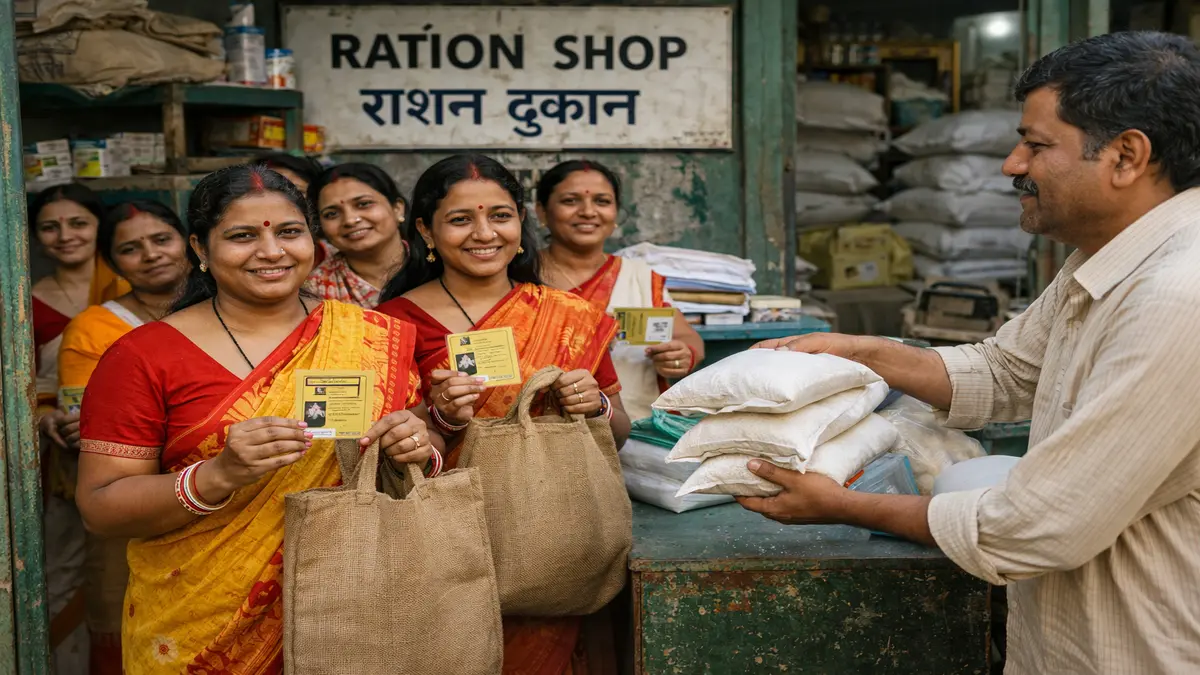
Hello friend, welcome to this detailed article about the Antyodaya Anna Yojana (AAY) in 2026. If you want to understand how the Indian government is supporting the poorest families with food security and additional benefits, you have come to the right place. This scheme has been a lifeline for millions, and in 2026, it continues to evolve with new updates and expansions. Let’s dive in and explore everything you need to know in simple words.
What is Antyodaya Anna Yojana?
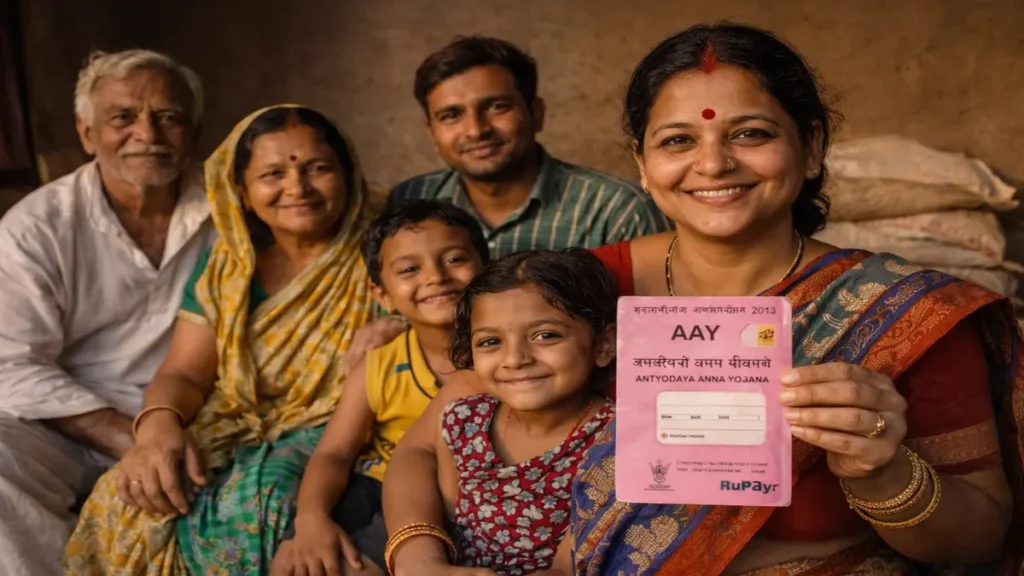
The Antyodaya Anna Yojana is a centrally sponsored scheme launched in December 2000 by the NDA government. The word “Antyodaya” means “uplifting the poorest,” and that is exactly what this scheme aims to do. It was created to identify the most vulnerable families living below the poverty line (BPL) and provide them with highly subsidized food grains.
Under this scheme, eligible families receive 35 kilograms of food grains per month. This includes wheat at just ₹2 per kilogram and rice at ₹3 per kilogram. The program operates under the National Food Security Act (NFSA) and is implemented through the Targeted Public Distribution System (TPDS) across all states and union territories.
Key Features and Benefits in 2026
As of 2026, the Antyodaya Anna Yojana remains one of the most critical welfare programs in India. Let me break down the main features for you.
| Feature | Details |
| Food Grain Entitlement | 35 kg per family per month |
| Wheat Price | ₹2 per kg |
| Rice Price | ₹3 per kg |
| Coverage | Poorest of the poor BPL families |
| Additional Benefits | Free electricity (up to 200 units) in some states, free sugar, fortified salt |
Food Security at Its Core
The primary benefit of AAY is food security. Each Antyodaya family gets 35 kilograms of food grains monthly, which is more than what Priority Household (PHH) cardholders receive (5 kg per person). This ensures that even the most impoverished households do not go hungry. According to official data from the NFSA portal, states like Uttar Pradesh have over 40 lakh AAY ration cards, while Tamil Nadu has more than 18 lakh AAY families benefiting from this scheme.
Additional State-Specific Benefits
In 2026, several state governments have introduced extra benefits for AAY families. For instance, in Jammu and Kashmir, the government is committed to providing 200 units of free electricity per month to every AAY household, and the project is in its final approval stage. Verification of eligible AAY households for this power benefit has already been completed in many regions.
In Delhi, the government has started the process to distribute free sugar to all AAY beneficiaries. From January 2026 to March 2027, over 65,000 AAY ration card holders in the capital will receive one kilogram of sugar free every month.
Some districts also distribute double-fortified salt to AAY families at subsidized rates to combat malnutrition.
Who is Eligible for Antyodaya Anna Yojana?
The eligibility criteria for AAY are designed to target the most vulnerable sections of society. The scheme is not for everyone; it specifically focuses on families that have little to no means of survival.
Categories of Eligible Families
| Rural Areas | Urban Areas |
| Landless agricultural laborers | Slum dwellers |
| Marginal farmers | Street vendors |
| Rural artisans (weavers, potters, carpenters) | Rag pickers and cobblers |
| Families headed by widows or disabled persons | Domestic workers |
| Elderly persons (60+) with no support | Rickshaw pullers and porters |
| Primitive tribal communities | Construction workers |
General Eligibility Conditions
To qualify for an Antyodaya ration card, a family typically needs to meet the following conditions:
- The family must be classified as Below Poverty Line (BPL)
- Annual family income should be up to ₹15,000
- The family should have no adult male member in case of widow-headed households
- Persons with physical or mental disabilities can apply
- The applicant must not already hold a ration card from any other place
How to Apply for an AAY Ration Card in 2026
If you believe you are eligible for the Antyodaya Anna Yojana, you can apply for a ration card through either online or offline mode. The process is straightforward.
Online Application Process
- Visit the official website of your state’s Food and Civil Supplies Department
- Look for the “Apply for New Ration Card” or “AAY Application” section
- Fill in the application form with accurate details about your family
- Upload the required documents
- Submit the form and note down the application number for future reference
Offline Application Process
- Visit the nearest Food and Civil Supplies office in your district or tehsil
- Obtain the application form (Proforma-C in some states)
- Fill in the form and attach all necessary documents
- Submit it to the designated officer
- The authorities will verify your details, and after approval, you will receive your AAY ration card
Documents Required
Here is a list of commonly required documents:
- BPL certificate or income certificate
- Address proof (voter ID, electricity bill, etc.)
- Identity proof (Aadhaar card, voter ID, etc.)
- Passport-sized photographs
- Surrender certificate (if you had a ration card elsewhere)
- Affidavit stating you never held a ration card before
Current Coverage and Scope in 2026
As of March 2026, the Antyodaya Anna Yojana covers a significant portion of India’s population. According to the Ministry of Food and Consumer Affairs, against the intended coverage of 81.35 crore beneficiaries under the National Food Security Act, states have identified approximately 79.40 crore persons, which is about 97.60% of the target.
There is still scope to add 1.95 crore more beneficiaries under the food law, and the government continues to urge states to identify all eligible poor households. This means that if you or someone you know is eligible but not yet covered, there is still an opportunity to apply.
How AAY Differs from PHH (Priority Household)
Many people get confused between AAY and PHH ration cards. Let me clarify this in simple terms:
| Parameter | Antyodaya Anna Yojana (AAY) | Priority Household (PHH) |
| Target Group | Poorest of the poor | Other BPL families |
| Food Grain Entitlement | 35 kg per family per month | 5 kg per person per month |
| Cost | Wheat ₹2/kg, Rice ₹3/kg | Free under PMGKAY |
| Identification | Based on specific vulnerability criteria | Based on state-wise BPL lists |
As you can see, AAY provides more food grains per family, which is designed to meet the needs of larger or more vulnerable households.
Grievance Redressal Mechanism
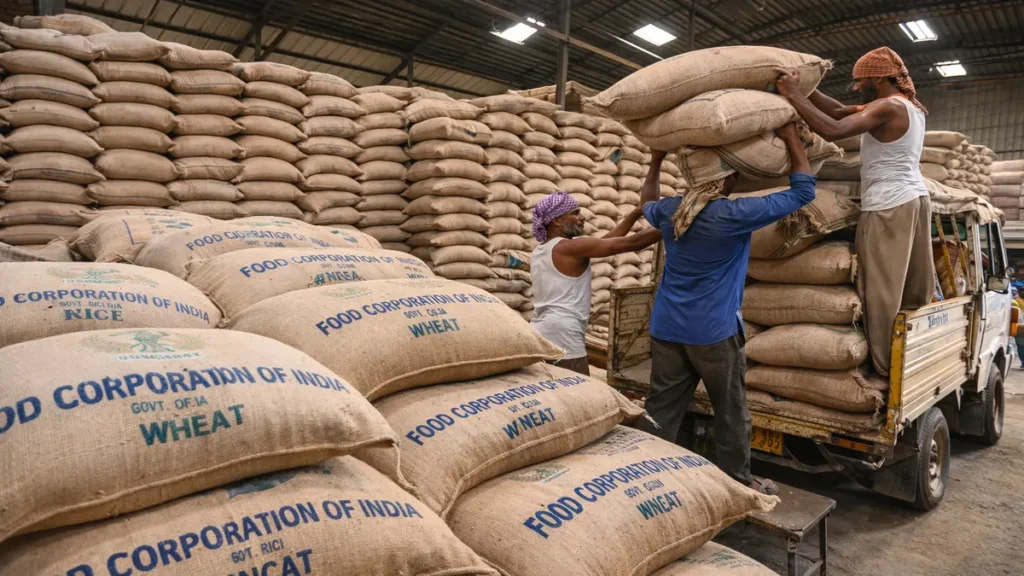
If you face any issues regarding the scheme, such as not receiving your entitled ration or problems with your card, the government has set up a grievance redressal system. The Food Corporation of India (FCI), state governments, and district-level officers act as District Grievance Redressal Officers (DGROs) to investigate and resolve complaints.
You can register your complaint through:
- The toll-free helpline numbers provided by your state
- The official website of the Department of Food and Public Distribution
- Your local fair price shop or ration shop
Conclusion
The Antyodaya Anna Yojana in 2026 continues to be a vital support system for the poorest families in India. With its core provision of 35 kg of subsidized food grains per month, it ensures that no family goes to bed hungry. Moreover, with additional benefits like free electricity in Jammu and Kashmir, free sugar in Delhi, and fortified salt in various districts, the scheme is expanding beyond just food security.
If you or someone in your community belongs to a vulnerable section of society and does not have an AAY ration card, I encourage you to visit your local Food and Civil Supplies office today. The government is continuously updating its beneficiary lists, and there is still scope to include more eligible families. Remember, this scheme is designed for you, so make sure you take full advantage of it.
Read more : UPTET Online Form 2026: Apply Online (27 March – 26 April)