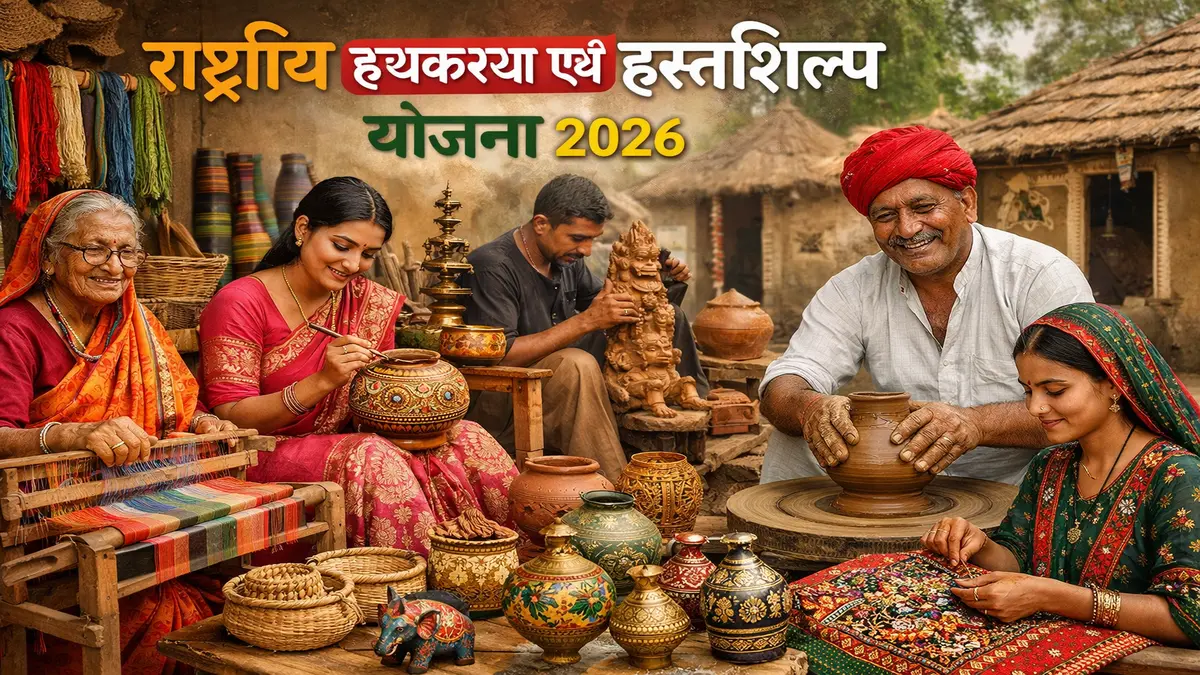
Hello friends, Welcome to this detailed article about the National Handloom and Handicraft Programme 2026, which was announced by Finance Minister Nirmala Sitharaman in the Union Budget 2026-27. If you are a weaver, an artisan, someone running a small textile business, or simply curious about how the government is working to preserve India’s rich handicraft heritage, you have come to the right place.
I have researched the official government announcements and the latest budget updates to bring you all the important information in simple, easy-to-understand English. Let us dive in and understand what this new scheme means for millions of craftspeople across the country.
What is the National Handloom and Handicraft Programme 2026?
The National Handloom and Handicraft Programme (NHHP) 2026 is a brand new initiative launched by the Government of India to give a strong boost to the textile sector . This programme is not just another government scheme; it is a comprehensive effort to bring all the existing small schemes for handlooms and handicrafts under one big umbrella.
The main goal is to provide “targeted and direct support” to weavers and artisans. Earlier, there were many different schemes, which sometimes created confusion. Now, with NHHP, the government wants to make sure that benefits reach the right people without any hassle .
This programme is a key part of the government’s larger “Integrated Programme for the Textile Sector,” which has five major components. NHHP is the third and one of the most important pillars of this strategy .
Key Features of the National Handloom and Handicraft Programme
To make things easy to understand, here are the main highlights of the NHHP 2026 presented in a simple table:
| Feature | Description |
| Name of Scheme | National Handloom and Handicraft Programme (NHHP) |
| Announced in | Union Budget 2026-27 |
| Main Objective | To integrate and strengthen existing schemes for weavers & artisans . |
| Target Beneficiaries | Handloom weavers, handicraft artisans, and village industries. |
| Support Provided | Design assistance, easy credit (loans), and digital market linkages . |
| Quality Focus | Upgradation of quality and improvement of production processes . |
| Special Initiative | Mahatma Gandhi Gram Swaraj Initiative for Khadi and village industries . |
Mahatma Gandhi Gram Swaraj Initiative: A Special Boost for Khadi
Under the umbrella of the National Handloom and Handicraft Programme, the government has launched a special sub-scheme called the Mahatma Gandhi Gram Swaraj Initiative . This initiative is specifically designed to strengthen Khadi, handloom, and handicrafts at the village level.
Here is what this initiative offers :
- Global Market Linkage: Helping local artisans sell their products in international markets.
- Branding Support: Creating strong brands for Indian handloom products so they are recognized worldwide.
- Streamlined Training: Providing better training and skilling opportunities for rural youth and weavers.
- Support for ODOP: This initiative will also support the “One District One Product” (ODOP) programme, helping each district showcase its special product.
Other Major Announcements for the Textile Sector
The National Handloom and Handicraft Programme is part of a bigger picture. The government has introduced four other major components to support the textile industry. Knowing about them will give you a complete understanding of the government’s plan :
1. National Fibre Scheme
This scheme aims to make India self-reliant in fibres. It will support natural fibres like silk, wool, and jute, as well as man-made and new-age fibres. This will help reduce import dependence and ensure that our weavers get good quality raw materials .
2. Textile Expansion and Employment Scheme
This part focuses on modernising old textile clusters. The government will provide capital support for new machinery, technology upgrades, and set up common testing centres. This will help increase productivity and create more jobs .
3. Tex-Eco Initiative
In today’s world, sustainability is very important. The Tex-Eco initiative aims to promote environmentally friendly textiles and apparel manufacturing. This will help Indian products compete globally by meeting international sustainability standards .
4. Samarth 2.0
Samarth 2.0 is the upgraded version of the government’s skilling programme. It will focus on modern skilling and advanced manufacturing techniques. The goal is to create an industry-ready workforce by collaborating with academic institutions and textile companies .
Mega Textile Parks and Export Support
Apart from these five programmes, the government also announced the setting up of Mega Textile Parks in challenge mode. These parks will provide world-class infrastructure and focus on value addition, especially in technical textiles .
For exporters, there is great news too! The government has extended the export obligation period from 6 months to 12 months for textile exporters. This means exporters now have more time to fulfill their commitments, which will help them manage their working capital better .
Why This Programme Matters for India
The National Handloom and Handicraft Programme 2026 is not just about money; it is about respect and recognition for the skilled artisans of India. Here is why it is important:
- Preserving Heritage: India has a rich textile tradition. This programme will help preserve traditional art forms like Chikankari, Banarasi silk, Phulkari, and many others.
- Employment Generation: The textile sector is labour-intensive. By supporting it, the government is helping create millions of jobs in rural areas.
- Boosting Exports: With better quality and global branding, Indian handloom products can capture a larger share of the international market. Currently, handloom and khadi products account for a very small portion of exports, and this scheme aims to change that .
- Empowering Women: A large number of handloom and handicraft workers are women. This scheme will directly empower them financially.
Challenges and The Way Forward
While the announcements are excellent, there are some challenges that need attention. Some experts point out that despite government support, weavers in remote areas still face issues like the “mahajan system” (middlemen taking a big cut) and lack of fair wages . Also, for Indian handlooms to become truly global, designers need to experiment more with fabrics like Khadi to create modern silhouettes that can be worn at international fashion events .
However, the government seems committed to addressing these issues. By combining training, technology, and market access, the National Handloom and Handicraft Programme 2026 has the potential to transform the lives of millions of artisans.
Conclusion
Friends, the National Handloom and Handicraft Programme 2026 is a visionary step by the Government of India. It recognizes the importance of our weavers and artisans who keep our culture alive. By integrating old schemes, providing direct support, and opening doors to global markets, this programme promises a brighter future for the handloom sector.
Read more: National Fiber Policy 2026: Connecting India for a Digital Tomorrow
If you are an artisan or a weaver, this is the time to take advantage of these government initiatives. Stay connected with the nearest handloom office or check the official Ministry of Textiles website for updates on how to register and benefit from these schemes.